Cob Saddle
Showing all 6 results
-
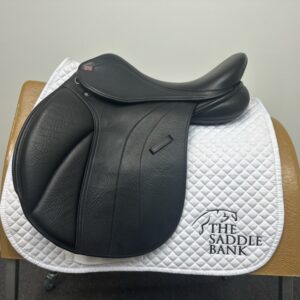
16.5 inch GFS Monarch Cob GP S650 Black Adjustable
$700.00 -
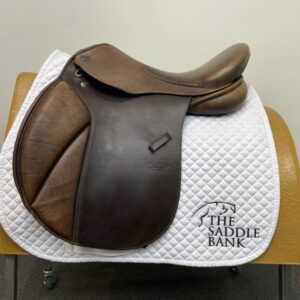
17 inch GFS Monarch Cob GP S650 Brown Adjustable
$500.00 -
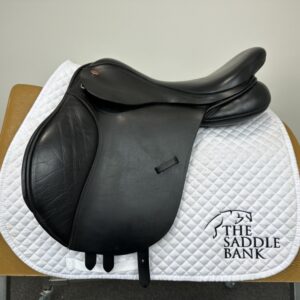
17 inch Kent and Masters Original Cob GP MGX Black Adjustable
$650.00 -
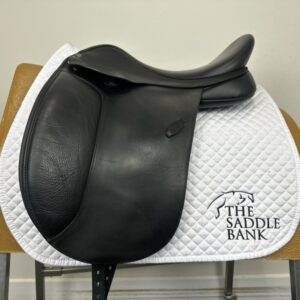
17.5 inch Arena Cob Dressage Black Adjustable
$550.00 -
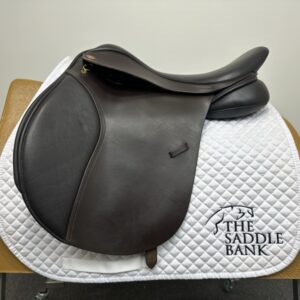
17.5 inch Kent and Masters Original Cob GP MGX Brown Adjustable
$600.00 -
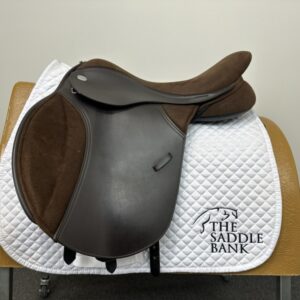
17.5 inch Thorowgood T4 Cob GP MGX Brown Adjustable
$350.00
Cob & Broad-Back Saddles | Stable Fits for Barrel-Shaped Horses
Anyone who has tried fitting a round, flat-backed, or low-withered horse knows the special kind of headache it brings. You grab a standard saddle, swap in an extra-wide gullet bar, tighten the girth, and hope for the best—only to watch it perch high, rock back and forth, or slide straight over the shoulder the minute you hit a trot.
At Premium Saddle Shop, we stock saddles specifically engineered to sit down on wide backs rather than rolling around on top of them. Whether you ride a Native breed, Haflinger, Irish Draught, Fjord, or a chunky Warmblood cross, our cob lineup gives your horse room to lift their back and swing through without getting pinched.
Every new and workshop-inspected used cob saddle in our tack room is available for international shipping across the US, UK, Europe, and Australia, paired with our 14-day in-barn trial so you and your fitter can test it right in your own arena.
Why Standard Saddles Fail on Broad Backs
You can’t fit a barrel-shaped horse by simply taking a sharp, inverted “V” tree and spreading the points wider. Broad horses have completely different skeletal angles, requiring tack designed for their actual build:
-
U-Shaped Hoop Trees: Real cob saddles are built around a rounded hoop arch instead of a steep V. This lets the front of the tree lie flat against wide shoulders so the tree points don’t dig into the trapezius muscle.
-
Flatter Rails & Slimmer Panels: To stop that tippy, perching feeling, cob saddles feature flatter tree rails and low-profile wool panels. This drops your center of gravity down closer to your horse’s back, shutting down lateral saddle roll.
-
Generous Spine Clearance: Wide channels keep pressure completely off the spine and give well-muscled backs plenty of room to work.
-
Smart Girthing Options: With features like point straps and balance webbing, you can anchor the saddle evenly—keeping it steady on trail rides or over fences without cranking the girth down to ungodly levels.
Trusted Cob & Native Horse Specialists
We carry purpose-built cob models from saddleries known for getting broad fits right:
-
Kent & Masters Cob Collection: Bench-made English leather saddles built on dedicated cob trees, equipped with the quick-change R-Bar system (available in GP, Dressage, and Jump).
-
Thorowgood T4 & T8 Cob: Lightweight, easy-care hybrid options with slim panels and multiple girthing configurations made specifically for rounder builds.
-
Black Country: Custom English craftsmanship using hand-shaped hoop trees, broad wool panels, and supple calfskin for close-contact comfort.
-
Fairfax Cob: High-performance designs backed by pressure-testing to ensure total shoulder freedom during heavy athletic work.
Checked in the Workshop, Proven in the Barn
A twisted tree on a wide-backed horse is a recipe for sore muscles. Before any second-hand cob saddle makes it to our shop floor, our saddlers put it through its paces:
-
Leverage & Symmetry Testing: We stress-test the tree frame to ensure it’s dead straight and check that the headplate hasn’t been bent out of shape by previous use.
-
Flocking Assessment: We feel through the panels to knead out hard spots and verify that the natural wool flocking sits soft and level.
-
Hardware Checks: Every billet strap, stitch line, and girth webbing loop is inspected for wear and strength.
Ride in It Before You Commit
No one can guarantee a fit from a photo alone. Put the saddle on over a clean pad, take it through all three gaits with your coach or fitter watching, and make sure it stays centered, balanced, and secure over a 14-day trial window.
Cob Fitting Q&A
Q: Why does my saddle keep sliding forward onto my horse’s shoulders? A: On low-withered or barrel-shaped horses, a tree that is too narrow or too “V” shaped will get pushed forward by the movement of the ribcage and shoulders. A flatter tree arch with low-profile panels sits lower and stays put behind the shoulder blade.
Q: Will a cob saddle work on a short-backed horse? A: Absolutely. Most native breeds and cobs have short weight-bearing areas. Cob saddles are intentionally built with compact panel footprints and swept-up rear gussets so they don’t sit past the last rib (the 18th thoracic vertebra).
Q: What exactly is a hoop tree? A: Imagine an upside-down “U” instead of an upside-down “V”. A hoop tree provides an open, rounded arch over the wither and shoulders, giving broad-shouldered horses space to rotate their scapula freely without hitting rigid tree points.
Q: Does “cob fit” just mean an Extra-Wide gullet? A: No. Width is only part of the equation. “Cob” refers to the overall architecture of the saddle—including flatter tree rails, low pommel height, and broad channel clearance. A standard saddle forced into an Extra-Wide setting will still pinch if the tree shape itself is wrong.
Q: Do you ship internationally? A: Daily. We pack every saddle in custom, double-walled boxes and ship insured via express courier straight to riders across North America, the UK, Europe, and Australia.
Need an Expert Second Opinion?
If you’re tired of watching your saddle roll, pinch, or slide up your horse’s neck, let’s take a look together. Email a few photos of your horse standing square on level ground along with your wither tracings to support@premiumsaddleshop.com, and we’ll point you toward the tree shapes that actually make sense for your horse’s build.