
Western Saddle
Showing all 3 results
-
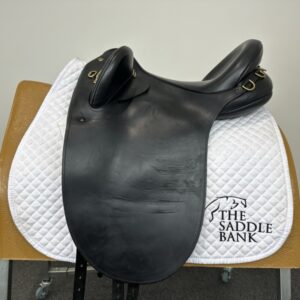
17.5 inch Bates Kimberley Black Adjustable
$1,000.00 -
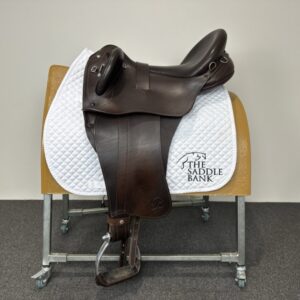
17.5 inch Bates Kimberley with Swinging Fender Brown Adjustable
$1,600.00 -
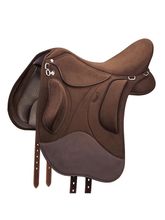
17.5 inch Wintec Pro Stock Black Adjustable
$900.00
Western Saddles | Built for Work, Trail Comfort & All-Day Balance
Whether you’re spending six hours in the brush, navigating steep mountain trails, or working cattle in the arena, a Western saddle is engineered around a fundamental principle: maximum weight distribution and unyielding durability. Built on a broad tree foundation with deep seats, high swells, and sturdy skirts, a well-balanced Western saddle keeps both horse and rider secure and comfortable across long miles and demanding ranch work.
At Premium Saddle Shop, our collection of new and workshop-inspected pre-owned Western saddles features trusted craftsmanship from leading American and international makers. From lightweight trail models and close-contact reining saddles to heavy-duty ropers, cutting saddles, and barrel racers, every piece in our inventory is evaluated for structural frame integrity, horn stability, and fleece condition.
We ship daily to riders across the USA, UK, Europe, and Australia, backing every Western saddle with our 14-day in-barn trial period so you can test the fit, gullet clearance, and rider balance right in your own saddle pad and arena.
Understanding Western Saddle Types & Tree Designs
Unlike English tack, Western saddles are categorized by their specific functional trees, horn angles, and seat contours:
-
Trail & Pleasure Saddles: Designed for long-distance comfort with padded, cushioned seats, lightweight leather or synthetic builds, deep double-rigging options, and numerous saddle strings for gear attachment.
-
Barrel Racing Saddles: Lightweight with high, upright horns for support around tight turns, deep seats to hold your position during acceleration, and forward-slanted stirrup leathers to keep your feet out in front.
-
Reining & Performance Saddles: Feature low-profile horns that stay out of your hands, flatter seats for rapid hip movement, and close-contact skirts that allow subtle leg cues during spins and sliding stops.
-
Roping & Ranch Work Saddles: Heavy-duty workhorses constructed with solid wooden or fiber-wrapped trees, thick rawhide-wrapped horns built to withstand heavy dallying, and reinforced double-girth rigging.
-
Western Dressage & All-Around Saddles: Balanced, central-seat designs that promote a correct ear-hip-heel alignment, perfect for riders shifting toward western dressage, versatility, or general schooling.
Tree Fits: Semi-QH vs. Full-QH Bars
Matching a Western saddle’s tree bars to your horse’s back angle is critical to prevent bridging and shoulder pinching:
| Bar Style | Angle / Gullet Width | Ideal Horse Build |
| Semi-Quarter Horse (SQHB) | Narrower angle (~6.25″ to 6.5″ gullet) | Horses with defined withers, narrower shoulders, and standard thoroughbred or lean quarter horse builds. |
| Full-Quarter Horse (FQHB) | Wider, flatter angle (~6.75″ to 7″ gullet) | Broader horses with flat backs, wide shoulders, low withers, and stocky ranch or draft-cross builds. |
| Draft / Extra-Wide Bars | Extra-wide angle (7.5″+ gullet) | Heavy draft crosses, broad cobs, and exceptionally wide stock horses requiring maximum shoulder flared clearance. |
Checked in the Workshop, Proven on the Trail
A Western saddle’s tree is hidden under heavy leather and fleece, making expert bench testing essential before sale. Every used Western saddle in our workshop goes through a rigorous inspection:
-
Tree & Horn Stress Testing: We apply multi-directional torque to the horn, fork, and cantle to ensure the wooden/fiberglass tree is solid with zero cracks, flexing, or loose horn wraps.
-
Rigging & Dees Security: All main rigging plates, latigo straps, and rear cinch dees are stress-tested for maximum pulling strength.
-
Fleece & Under-Skirt Condition: We inspect the synthetic or natural sheepskin underside to ensure clean, plush padding without bare spots or hard debris clusters that could cause pressure sores.
Test the Balance on Your Horse
Tack up with your favorite pad, cinch up, and ride through all three gaits during your full 14-day trial window to ensure proper spinal clearance, no saddle roll, and complete rider comfort.
Western Saddle Q&A
Q: How do I know what seat size I need in a Western saddle?
A: As a general rule, your Western seat size will be roughly 1.5 to 2 inches smaller than your English seat size due to the high fork and cantle. Most adult riders fit comfortably into a 15″ to 16″ Western seat, while smaller riders may prefer a 14″ to 14.5″, and larger riders a 16.5″ to 17″.
Q: How far off the wither should a Western gullet sit?
A: When cinched up over a standard Western pad, you should be able to comfortably fit two to three fingers vertically between your horse’s wither and the underside of the saddle fork/swell.
Q: Is a lightweight synthetic Western saddle as durable as a leather one?
A: Modern synthetic Western saddles (like Wintec or Cordura models) are exceptionally durable, weather-resistant, and easy to clean, making them ideal for casual trail riding or foul-weather schooling. However, heavy ranch work or dallying roped cattle still requires a traditional leather saddle on a reinforced tree.
Q: Do you ship Western saddles internationally?
A: Daily. Western saddles are securely packed in heavy-duty, reinforced boxes and shipped fully insured via express courier directly to riders in the USA, UK, Europe, and Australia.
Need Help Finding the Right Western Bar Fit?
If you aren’t sure whether your horse requires Semi-QH or Full-QH bars, or need advice on seat sizing, our fitting team is ready to assist. Email clear side-profile and behind-the-wither photos of your horse to support@premiumsaddleshop.com, or reach out on WhatsApp at +1 419 280-0596.